Friday, 19 December 2014

Risk Assessment

Group Members: Arsena, Diana, Courtney and Naomi
Location: Train Station
Hazard
Person(s) at Risk
Likelihood of Hazard
1 – Extremely Unlikely
5 – Extremely Likely
Severity of Hazard Outcomes
1 – Very Low Risk
5 – Very High Risk
Risk Level
(Likelihood + Severity)
2
Measures to Take to Manage Risk
Risk Managed?
Y/N
Hit by a trainActors15Not likely very severe Make sure no one is near the trains or train tracks during filming or before filming.Yes
Trip over the platformEveryone24Likely
Severe 
To stand behind the yellow line on the platform Yes
Fall down the escalator Everyone32Not too likely to happen
Not too severe 
To look carefully before walking with the equipment Yes
Running at the station Everyone53Likely
Quite severe 
Make sure to take time when in the station. Especially when it is crowded because you could fall and break something or hurt yourselfYes

Shooting Schedule

Day
Scene
Location
Equipment
Costumes
Props
Cast +Crew
1


1
1


2
Office


Train Station
Camera
Tripod
DSLR Camera


DSLR Camera
Camera
Tripod
Business Wear (Blouse, trousers, heels)

Blouse, trousers, heels and suit
Folder
Printer
Computer
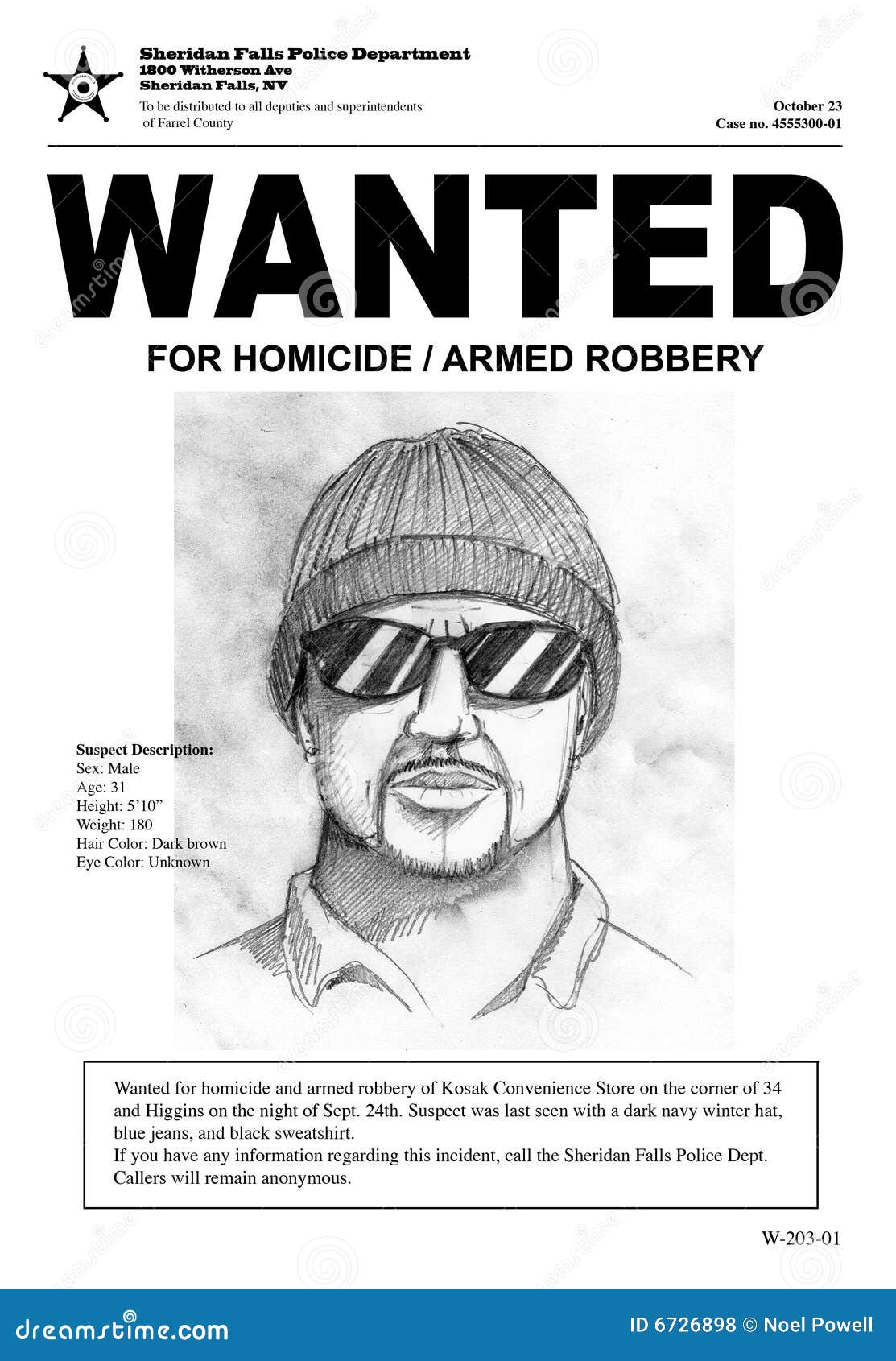
Wanted sheets

Wanted sheets
folder
Arsena
Courtney
Naomi
Diana


Arsena
Elton
Naomi
Courtney
Diana

Wednesday, 17 December 2014

Costumes and Props

Character Name: Agent Qaushi

Costume:


Props:

Character Name: Elton Jones

Costume:


Props:
None

Other Props in scenes:


Tuesday, 16 December 2014

Treatment


Treatment
Group Roles
Cinematography:
Naomi and Courtney


Mise-en-scene:

Arsena
Editing:
Diana
Title:
 'Hitlist'

Synopsis:
A spy has a Hitlist, full of the most notorious criminals, when she is confronted by the man who is at the top of the list.


Key Genre Conventions: 

Suspense
Cliffhanger
Clear who the villain is (Man on hitlist)


Friday, 12 December 2014

1st Production Meeting

Today we had our first production meeting. We were making a plan of the sequence we will film.

I will be in a group of 4 people. Me, Naomi, Courtney and Arsena.


This is what we have planned throughout the lesson.


We have decided about our working title which, from now on, is ''HITLIST''
We were also planning the plot and the actors needed for our sequence. Our meeting went well as we have planned a few thing forward, such as camera shots. The plan will help us in the future when we will start filming the thriller opening.

Friday, 5 December 2014

How to Film a Thriller

How to Film a Thriller


Long Shot


P.O.V Shot


Cross Dissolve


Tracking Shot


High Angle Shot


Medium Close-up Shot


Tilt


Shot Reverse Shot


Close Up


Wide Angle Lens, Deep Focus


Low Angle Shot


Fast Editing


Extreme Close Up


Diegetic Sound
Sinister Music
Deep Note

Wednesday, 26 November 2014

Movie North By Northwest

North By Northwest


  A Thriller North By Northwest (1959) by Alfred Hitchcock is a perfect example of a thriller. To prove it I would start with a plot. Thrillers has a villain driven plot. In this movie there is a villain and a hero. 
Villain - Phillip Vandamm
(James Mason)


Hero - Roger O. Thornhill
(Cary Grant)

In thrillers, villain is usually wealthier and more resourceful than hero. In North By Northwest Phillip Vandamm is wealthier and more resourceful than Roger O. Thornhill as Vandamm has more money and men who are working for him. Vandamm makes Thornhill overcome a lot of difficulties as he is trying to get rid of him, while Thornhill has to do his best and stay alive.


In this movie there are guns and danger as it has to be in thriller movies.


  In this scene Roger O. Thornhill pretends to be shot down to trick the villain Phillip Vandamm to think that he died and stop coming after him.


In this scene Thornhill had to overcome a difficulty made by Vandamm who was trying to kill him. Thornhill does not have anything to fight against the plain with, however he still manages to stay alive and move on towards finding out the truth.


  In this movie there is a frequent action. It starts when Thornhill get kidnapped by two men sent by Vandamm. 
  Then the men gets Thornhill drunk and makes him drive the car straight to the ocean. However, he realizes what is happening and drives away without Vandamm's men catching him.
  Later on, Thornhill has to keep on running from Vandamm and his traps as well as death that was so close to him.


This movie also has a climax as well as all of the thrillers. The climax starts when Thornhill find out why he was being hunted as an officer explains him the situation and the confusion. It ends when Thornhill finally 'beats' Vandamm and his men even though with the help of the others.
There is not always a happy ending in thrillers but after constant action and fear, Alfred Hitchcock gives the audience a rest.


Tuesday, 18 November 2014

Past Student Thrillers

Past Student Thrillers

We have looked through 5 student thrillers. We have been asked to choose 3 of them and talk about them. In lesson the class has been given a choice of 1-4 to rate the thrillers.

4 - Excellent
3 - Good
2 - Basic
1 - Poor

We have looked and rated these thrillers in order to understand and remember the main mistakes students make when creating their thrillers. This should help us to not to repeat the mistakes and know what is the best a student can do with resources provided from school.

These are the three thrillers I chose to write about:

1. Hidden


  I have rated this thriller to 1 point (poor). My opinion was based on Mise-en-Scene. There was a lot of mistakes and poor choices made when filming this thriller.
  The group of students has chosen to film their thriller in the evening which was a very bad decision as the thriller was very hard to see and understand because of the darkness. The acting in the thriller was not good enough and the setting was not well organised. To prove my point I could say that the actors in the thriller did not manage to cross the road together as the female actor had to push the male actor to cross.
  The use of camera was poor as in the thriller there was a one long shot of the actors walking towards which took about 2/5 of the sequence.


2. Hunter


  In my opinion this thriller was worth 3 points (good). The students has chosen a good place to film their thriller as it was related to the idea hidden in the thriller.
  The thriller was about a missing student and a police officer coming to school to question a teacher. I liked the fact that the thriller was filmed in school and it went along with the sequence. I was pleased with the acting of the actors in this thriller and the way it ends makes me curious about what is about to happen next.
  The camera work was done well however the sound was hardly possible to hear and understand. 


3. Watch Your Back


  This is a thriller I have chosen myself. I would rate it 4 points(Exellent). I really liked the presentation of this idea even knowing that the idea itself is nothing special.
  'Watch Your Back' expressed the name very well as it kind of made me feel unsafe. Good job was done when editing this thriller, it really interested me and got my attention. 
  Even though there was not a lot of acting I still was pleased with the actors. The thriller seemed interesting and unpredictable as well as drawing into.

Tuesday, 4 November 2014

Preliminary Exercise

Detention


 In this task we had to show our understanding in the filming techniques that we have learned in lesson. We have chosen the idea of detention as we to had film the sequence in school and the idea was matching the place. 
 We were told to use following shots/filming techniques:

  • Match on Action
  • Eye line Match
  • Shot,Reverse shot
  • 180 Degree Rule
 Match On Action
Match on action (or cutting on action) is an editing technique for continuity editing in which one shot cuts to another shot portraying the action of the subject in the first shot.
We had done this technique as the student went through the door to go to the corridor, and in the other shot she comes out to the corridor. We had also done this technique as the student stood up and pushed the chair back.


Eye line Match
 Eye line match worked for us pretty well. We have filmed the teacher looking at the paper, and then showed the paper she was looking at.


 Shot, Reverse shot
 We have not done the shot reverse shot. We could have done it when the teacher and the student were talking to each other.

 180 Degree Rule
We have followed this rule as when showing the characters they stays at the same hand side. However, we had to edit the video as we broke the rule while filming the sequence.


Monday, 20 October 2014

Media Theories

Media Theories

1.The Enigma Code by Roland Barthes

The Enigma Code is interpreting story lines in different ways.

Bathes says that all narratives share structural features that are brought together in different ways. Although there are differences between individual narratives, they all have a limited number of organisational structures that affect our reading of texts - these are called 'Narrative/Enigma Codes'. According to Barthes,there is always more than one way to read the text. Barthes theory of the five codes is a way of grouping signifies according to the role they play in the text.
These are categorized as :


  • The Hermeneutic Code - keeping the audience in suspense and questioning (the voice of truth)
  • The Proairetic Code - leaving the audience wondering what is going to happen (the voice of empirics)
  • The Sematic Code - keeping the audience guessing if there is another meaning behind the story line (the voice of person)
  • The Symbolic Code - very similar to The Sematic Code acts in a wider level, organizing sematic meanings into broader and deeper sets of meaning.(the voice of symbol)
  • The Cultural Code - movie cannot be interpreted in different way as the facts are in the movie (the voice of knowledge)


2. Todorov's Narrative Theory

In 1969 Todorov produced a theory which he believed to be able to be applied to any film.

Todorov believed that all films followed the same narrative pattern through various stages.

There are five stages the narrative can progress through:
  • A stage of equilibrium,
  • A disruption of that order by event,
  • A recognition  that the disorder has occurred,
  • An attempt to repair the damage of the disruption,
  • A return or restoration of a NEW equilibrium.


3. Binary opposites by Levi Strauss 

Claude Levi-Strauss was a French anthropologist. He believed that human's brain relates every term with other that has an opposite meaning.  This means that when a term is said, human's brain automatically thinks of an opposite one to give the term an easily understandable meaning. For example, a term 'bad' has its opposite which is 'good', 'short' is opposite to 'tall', 'cold' is opposite to 'warm', etc.

In movies, binary opposites can be a little harder to recognize as they are not that obvious, however there are usually some. For example, in a movie 'North by Northwest' By Alfred Hitchcock there are binary opposites between the main character Roger  O. Thornhill and his seeker Philip Vandamm. Roger O. Thornhill is a hero in the movie and Philip Vandamm is a villain, Also, one less obvious difference between the two is that the villain is wealthier that the hero as the villain own more recources as well as power than hero. This is a common binary opposite in thriller genre.


4. Vladimir Propp - Character Types

Vladimir Propp analysed a lot of different folk tales which defined all the main character of ANY narrative into 8 broad character types. The 8 Character types are:

  • The hero - (AKA victim/paladin/winner.)  Reacts to the donor, wed the princess.
  • The villain - Struggles against the hero.
  • The donor - Prepares the hero or gives the hero some magical object.
  • The dispatcher - Character who makes the lack known, sends the hero on his way.
  • The false hero - Falsely assuming the role of hero, perceived as good character in beginning but emerges as evil.
  • The helper - Gives support to the hero/ helps the hero in the quest.
  • The princess - The reward for the hero, but also needs to be protected from the villain/ the character that hero marries.
  • Her father - Gives the task to the hero, identifies the false hero.

5. Laura Mulvey - The Male Gaze

Laura Mulvey is a British feminist film theorist. She is currently a professor of film and media studies. She believes that women are materialized and sexually objectified in movies as their bodies are always in a first place. 

  • Women viewed as the objects of male erotic desire - in film and audience
  • Men are presented as active, women - passive
  • Women do not have agency - they do not move the plot forward
  • The audience is forced to identify with male gaze as the camera shots and angles are showing women as sexual objects
  • Cinema reflects patriarchal (male dominated) society
  • Patriarchy and phallocentrism linked - phallus (penis) a symbol of power - e.g. in cinema guns = phallus = power.

Tuesday, 14 October 2014

Conventions of a Thriller

Conventions of a Thriller

A Thriller is a villain driven plot. The villain presents obstacles the hero must overcome. 

Thrillers have:
  • Fast pacing
  • Frequent action
  • Resourceful heroes who must thwart the plans of more powerful and better equipped villains.
Thrillers uses devices such as:
  • Suspense
  • Red herrings
  • Cliffhangers
Red herrings - are used to refer to something that misleads or distracts from the relevant or important issue. It may be either a logical fallacy or a literary device that leads audience or characters towards a false conclusion. In  other words, red herrings are used to confuse the audience and draw their attention away from important part of a movie.

Cliffhangers - a plot device in fiction which features a main character in a precarious or difficult dilemma, or confronted with a shocking revelation at the end of a movie. A cliffhanger is hoped to ensure the audience will return to see how the characters resolve the dilemma. In other words, cliffhangers are used to draw the audience into the movie at the end of it by not allowing them to know the true conclusion. Then, the other movie is made.

  • Danger and violent confrontations are standard plot elements of a Thriller.
  • The climax of a mystery is when the mystery is solved, a thriller climaxes when the hero finally defeats the villain, saving his own life and often the lives of others.
  • Thrillers can be defined by the primary mood that they create: Fearful excitement.
If it Thrills you - Its a Thriller.

Thriller is a very flexible genre. It usually includes some sub-genres which may also include elements of other genres.

Action Thriller - violent, obvious antagonist, a lot of guns and explosions. Examples: James Bond films, The Transporter and The Jason Bourne novels.


Conspiracy Thriller - hero confronts a large, powerful group of enemies whose true extent only he/she recognizes. Examples: Three days of the Condor, Capricorn One and JFK.


Crime Thriller - focused on criminals, rather than policeman. Offers a suspenseful account of a successful or failed crime or crimes. Includes murders, robberies, chases, shootouts. Examples: The Killing, Seven, Inside Man, Reservoir Dogs.


Disaster Thriller - about natural or artificial disaster such as floods, earthquakes, hurricanes, volcanoes, etc., or nuclear disasters as an artificial disasters. Example: 2012


Drama Thriller - slower paced and involves a great deal of character development along with plot twists. Examples: The Illusionist, The Interpreter, The Prestige.


Legal Thriller - lawyer - heroes/heroines confront enemies outside, as well as inside, the courtroom and are in danger of losing not only their cases but their lives. Example: A Time To Kill


Medical Thriller - Involves a medical personnel. Examples: Awake, The Hot Zone.


Political Thriller - hero/heroine must ensure the stability of the government that employs him. Examples: Seven Days in May, Agency, The Day of the Jackal.


Psychological Thriller - emotional or mental conflict, rather than physical. Examples: Suspicion, Shadow of a Doubt, Strangers on a Train, Blue Velvet.


Spy Thriller - Hero is generally a government agent who must take action against agents of a rival government or terrorists. Examples: 24, From Russia, with Love.


Techno-thriller - technology is described in detail and make essential to the viewer's understanding of the plot. Examples: The Hunt for Red October.


Religious Thriller - related to religious objects, institutions and questions. Examples: The Da Vinci Code, The name of the Rose, Foncault's Pendulum.